
Key Takeaways
Urban beekeeping can be highly profitable with the right location and setup.
Ensure you have the necessary permits and check local regulations before starting.
Choosing the right equipment and hive placement is crucial for success.
Regular hive inspections and pest management are essential for maintaining healthy bees.
Diversifying income streams through additional products and services can increase profitability.
Introduction: Transform Your Urban Apiary into a Profitable Venture
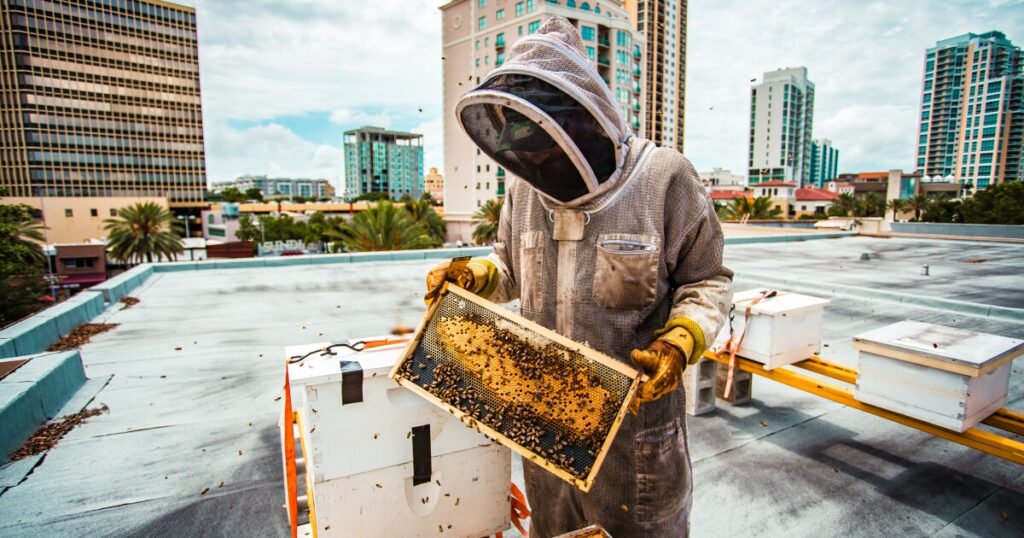
“Urban Beekeeping: New Hives An Artful …” from www.wusf.org
Urban beekeeping is not just a hobby; it can also be a lucrative business. By keeping bees in cities, you can produce high-quality honey and other bee products, while also contributing to urban biodiversity. In this guide, I’ll walk you through the essential steps to turn your urban apiary into a profitable venture.
The potential benefits of urban beekeeping
Urban beekeeping offers numerous benefits. First and foremost, bees play a crucial role in pollinating plants, which helps increase urban greenery and biodiversity. Additionally, urban beekeepers often find that their bees produce more honey compared to rural counterparts due to the diverse range of plants available in cities.
Besides that, urban beekeeping can also be a source of income. From selling honey and beeswax to offering pollination services, the opportunities are plentiful. Moreover, beekeeping can be a rewarding experience, providing a sense of accomplishment and connection to nature.
Overview of key steps to profitable urban beekeeping
To make your urban beekeeping venture profitable, follow these key steps:
Choose the right location for your beehouse
Set up your beehouse with essential equipment
Manage your urban apiary effectively
Harvest and process honey efficiently
Market and sell your honey
Diversify income streams
Choosing the Right Location for Your Urban Beehouse
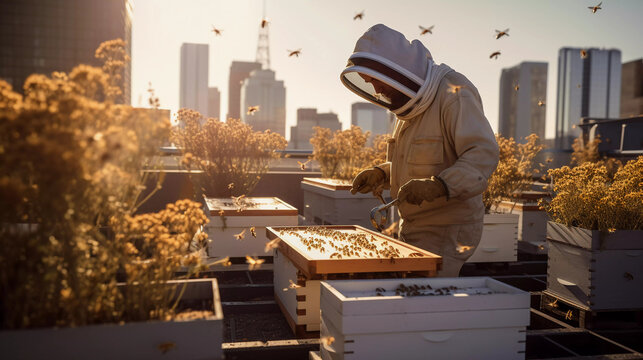
“Urban Beekeeping Images – Browse 2,293 …” from stock.adobe.com
The first step in urban beekeeping is choosing the right location for your beehouse. The location will significantly impact the health of your bees and the amount of honey they produce. For more details on how to create an ideal environment, check out this safety guide for urban gardens.
Assessing space requirements
Urban beekeeping doesn’t require a lot of space. A few square feet per hive is sufficient, making it accessible even for those with limited space. However, it’s important to ensure that the hives are placed in a spot where they have access to sunlight and are protected from strong winds. For more insights on urban beekeeping, check out this article on urban beekeeping problems and benefits.
Local regulations and permits
Before setting up your beehouse, check your local regulations and obtain the necessary permits. Many cities have specific rules regarding beekeeping, such as the number of hives allowed and the distance from property lines. Ensuring compliance with these regulations will help you avoid potential legal issues.
Nectar and pollen sources availability
Bees need a steady supply of nectar and pollen to thrive. Therefore, it’s essential to choose a location with abundant flowering plants. Urban areas often have diverse plant species, providing a rich source of food for bees. Additionally, you can plant bee-friendly flowers in your garden or encourage your neighbors to do the same.
Lavender
Sunflowers
Mint
Roses
Setting Up Your Beehouse
Once you’ve chosen the right location, the next step is to set up your beehouse. Proper setup is crucial for the success of your urban apiary.
Essential equipment for a beehouse
To start beekeeping, you’ll need some essential equipment. Here are the basics: Make sure to consider space-saving solutions for urban beekeeping.
Beehive: Choose a hive that’s suitable for urban settings, such as a Langstroth or top-bar hive.
Bees: Purchase a bee colony from a reputable supplier.
Protective gear: A bee suit, gloves, and a veil will protect you from stings.
Tools: A hive tool, smoker, and bee brush are necessary for hive maintenance.
Hive installation tips
Installing your hive correctly is essential for the health and productivity of your bees. Here are some tips:
Place the hive on a sturdy stand to keep it off the ground and protect it from pests.
Ensure the hive entrance faces south or southeast to maximize sunlight exposure.
Provide a water source nearby, such as a shallow dish with pebbles.
Ensuring safety and accessibility
Safety is paramount when keeping bees in urban areas. Ensure that your hive is placed in a secure location, away from high-traffic areas. Additionally, make sure that the hive is easily accessible for regular maintenance and inspections.
Managing Your Urban Apiary
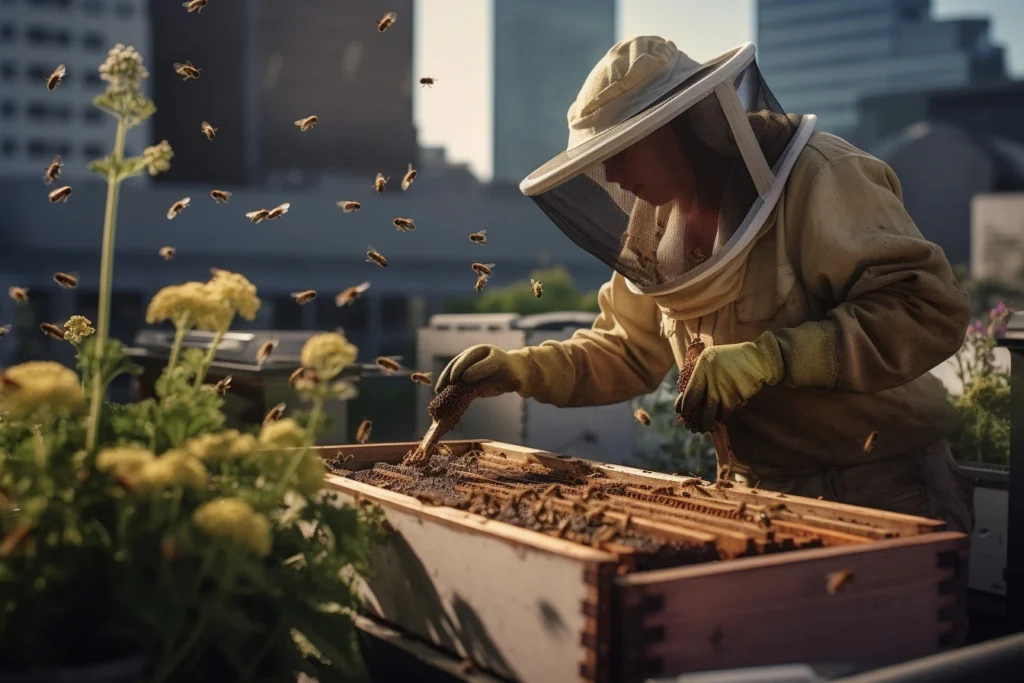
“Urban Beekeeping in Sustainability …” from zeroemissionjourney.com
Effective management of your urban apiary is crucial for maintaining healthy bees and maximizing honey production. For more detailed strategies, check out these essential strategies for mason bee health.
Regular hive inspections
Regular hive inspections are essential to monitor the health of your bees and identify any potential issues early on. During inspections, check for signs of diseases, pests, and adequate food stores. Inspecting your hive every 7-10 days during the active season is a good practice.
Pest and disease management
Pests and diseases can pose significant threats to your bees. Implementing proactive measures can help prevent infestations and outbreaks. Here are some tips:
Use screened bottom boards to reduce mite infestations.
Regularly clean and sanitize your hive tools.
Monitor for signs of common bee diseases, such as American foulbrood and nosema.
When and how to harvest honey
Harvesting honey is one of the most rewarding aspects of beekeeping. The best time to harvest honey is during the late summer or early fall when the bees have had ample time to collect nectar. You can tell it’s time to harvest when the honeycomb cells are capped with wax.
To harvest, first, use a bee smoker to calm the bees. Then, carefully remove the frames from the hive. Use a bee brush to gently sweep the bees off the frames. Place the frames in a honey extractor to spin out the honey. Make sure to leave enough honey for the bees to survive the winter.
Processing and packaging tips
Once you’ve harvested the honey, it’s time to process and package it. Start by straining the honey to remove any impurities. You can use a fine mesh strainer or cheesecloth for this purpose. After straining, let the honey sit for a day or two to allow any air bubbles to rise to the surface.
Next, pour the honey into clean, sterilized jars. Make sure to leave some space at the top of the jar to prevent overflow. Seal the jars tightly and label them with the harvest date and type of honey. Proper packaging not only preserves the quality of your honey but also makes it more appealing to customers. For more tips on beekeeping, check out our beekeeping stories.
Use food-grade containers for storing honey.
Label jars with the type of honey and harvest date.
Store honey in a cool, dark place to maintain its quality.
Marketing and Selling Your Honey
Now that you have your honey packaged and ready, it’s time to sell it. Effective marketing and sales strategies can help you reach a wider audience and increase your profits. For more insights, check out this comprehensive guide on making money with beekeeping.
Start by creating a unique brand for your honey. This involves designing an attractive logo and packaging that reflects the quality and uniqueness of your product. A strong brand identity can set you apart from competitors and attract more customers. For more tips on how to make money with beekeeping, check out this comprehensive guide.
Design a memorable logo and packaging.
Highlight the unique qualities of your honey, such as its floral source or organic production.
Share your story and the benefits of urban beekeeping.
Creating a unique brand
Creating a unique brand is essential for standing out in the market. Start by designing a logo that represents your honey and your values. Use colors and imagery that evoke the natural and artisanal qualities of your product. Additionally, consider using eco-friendly packaging to appeal to environmentally-conscious consumers.
Local sales strategies
Local sales strategies can help you build a loyal customer base in your community. Consider selling your honey at farmers’ markets, local stores, and community events. Building relationships with local businesses and customers can lead to repeat sales and word-of-mouth referrals.
Besides that, you can also partner with local restaurants and cafes to supply them with your honey. Offering samples and hosting tasting events can also attract more customers and increase your sales.
Online and market vendors
In addition to local sales, consider selling your honey online. Setting up an online store on platforms like Etsy or Shopify can help you reach a wider audience. Use social media to promote your honey and engage with potential customers. Share photos, videos, and stories about your beekeeping journey to create a connection with your audience.
Additionally, consider selling your honey through market vendors. Partner with online marketplaces that specialize in artisanal and organic products. This can help you reach customers who are specifically looking for high-quality, locally-produced honey.
Diversifying Income Streams
To maximize your profits, consider diversifying your income streams. In addition to selling honey, there are several other products and services you can offer.
Sell additional bee products like wax, propolis, and pollen.
Provide pollination services to local gardens and farms.
Offer beekeeping workshops and consulting services.
Additional products like wax, propolis, and pollen
Bees produce more than just honey. Beeswax, propolis, and pollen are valuable products that can be sold separately. Beeswax can be used to make candles, lip balms, and other cosmetics. Propolis has medicinal properties and can be sold as a health supplement. Bee pollen is a popular superfood that can be sold to health-conscious consumers.
Providing pollination services
Another way to diversify your income is by offering pollination services. Many urban gardens and farms need pollinators to increase their crop yields. You can rent out your bees to these gardens and farms for a fee. This not only provides an additional income stream but also helps support local agriculture.
Offering beekeeping workshops and consulting
Sharing your knowledge and experience with others can be a profitable venture. Consider offering beekeeping workshops and consulting services. You can teach beginners how to start their own urban apiaries or provide advanced training for experienced beekeepers. Hosting workshops and providing consulting services can help you build a reputation as an expert in the field and attract more customers.
Success Stories: Urban Apiaries Making a Difference
Many urban beekeepers have turned their passion into profitable businesses. These success stories can serve as inspiration and provide valuable insights into what works and what doesn’t.
Inspiring examples of profitable urban beekeepers
One inspiring example is the story of John and Jane Doe, a couple who started their urban apiary in a small backyard in New York City. They began with just two hives and quickly expanded to ten. By focusing on high-quality honey and unique flavors, they built a loyal customer base and now sell their honey in local stores and online.
“We never imagined that our small backyard hobby would turn into a thriving business. The key was to focus on quality and build strong relationships with our customers.” – John Doe
Another example is Sarah Smith, who started her urban beekeeping venture in San Francisco. She not only sells honey but also offers beekeeping workshops and consulting services. By diversifying her income streams, she has created a sustainable and profitable business.
“Diversifying my offerings was crucial to my success. By providing workshops and consulting, I was able to reach a wider audience and increase my income.” – Sarah Smith
Lessons learned and best practices
These success stories highlight several key lessons and best practices for urban beekeeping. First, focus on quality. High-quality honey and bee products will attract more customers and build a loyal customer base. Second, build strong relationships with your customers and community. Word-of-mouth referrals and repeat sales can significantly boost your profits. For more insights, check out our beginner’s journey into urban beekeeping.
Finally, diversify your income streams. Offering additional products and services can help you reach a wider audience and create a more sustainable business. By following these best practices, you can turn your urban apiary into a profitable venture.
Lessons learned and best practices
These success stories highlight several key lessons and best practices for urban beekeeping. First, focus on quality. High-quality honey and bee products will attract more customers and build a loyal customer base. Second, build strong relationships with your customers and community. Word-of-mouth referrals and repeat sales can significantly boost your profits. For more insights, check out this comprehensive guide on making money with beekeeping.
Finally, diversify your income streams. Offering additional products and services can help you reach a wider audience and create a more sustainable business. By following these best practices, you can turn your urban apiary into a profitable venture.
Common Challenges and How to Overcome Them
Urban beekeeping comes with its unique set of challenges. However, with the right strategies, these obstacles can be overcome, ensuring a successful and profitable urban beekeeping apiary.
Handling urban-specific issues
One of the main challenges urban beekeepers face is the limited space. Unlike rural areas, urban settings often have smaller spaces for hive placement. To address this, consider using compact hive designs like the top-bar hive, which requires less space. Additionally, placing hives on rooftops or balconies can be a great way to utilize available space effectively.
Another issue is the proximity to neighbors. It’s essential to maintain good relationships with those living nearby. Inform your neighbors about your beekeeping activities and address any concerns they might have. Installing barriers like fences or hedges can also help direct the bees’ flight path upwards, reducing the chances of human-bee interactions.
Managing bee health in a city environment
Urban environments can expose bees to various pollutants and chemicals. Therefore, it’s crucial to monitor the health of your bees regularly. Conduct hive inspections every 7-10 days during the active season to check for signs of diseases or pests. Implement integrated pest management (IPM) practices to keep your bees healthy without relying heavily on chemicals.
Besides that, providing a clean water source is vital. Bees need water for various hive activities, and ensuring they have access to clean water can prevent them from drinking from contaminated sources. A shallow dish with pebbles or a birdbath can serve as an excellent water source for your bees. For more tips on creating a bee-friendly environment, check out this pollinator paradise guide.
Final Thoughts
Urban beekeeping offers a unique opportunity to produce high-quality honey and other bee products while contributing to urban biodiversity. With the right strategies and dedication, you can turn your urban apiary into a profitable venture.
Recap of key points
To summarize, successful urban beekeeping involves: understanding the behavior of mason bees and their work ethic.
Choosing the right location and ensuring compliance with local regulations.
Setting up your beehouse with essential equipment and proper hive placement.
Managing your apiary effectively through regular inspections and pest management.
Harvesting and processing honey efficiently.
Marketing and selling your honey through local and online channels.
Diversifying income streams with additional products and services.
Encouragement to explore urban beekeeping
Urban beekeeping is not only a rewarding hobby but also a viable business opportunity. By following the tips and strategies outlined in this guide, you can create a thriving urban apiary. Remember, the key to success is dedication, continuous learning, and a passion for beekeeping. If you’re new to this field, consider reading about urban beekeeping for beginners to get started.
So, why wait? Start your urban beekeeping journey today and experience the joy and benefits it brings!
Frequently Asked Questions (FAQ)
Here are some common questions about urban beekeeping and their answers:
How much space do I need for an urban apiary?
You don’t need a lot of space for urban beekeeping. A few square feet per hive is sufficient. Rooftops, balconies, and small gardens can all be suitable locations for your hives.
Can I keep bees in my apartment balcony?
Yes, you can keep bees on an apartment balcony as long as it meets the space and sunlight requirements. Ensure that the hive is placed securely and that there is a water source nearby. It’s also essential to check with your building management and local regulations before setting up your hive.
Ensure the balcony receives enough sunlight.
Provide a water source for the bees.
Check local regulations and building management policies.
How long before I see profits from my urban apiary?
The timeline to profitability can vary. Most beekeepers start seeing returns on their investment within 1-2 years. Factors such as hive health, honey production, and effective marketing can influence the time it takes to become profitable.
What are the biggest threats to urban beekeeping?
The biggest threats to urban beekeeping include pests, diseases, and exposure to pollutants. Regular hive inspections, proactive pest management, and providing clean water can help mitigate these risks.
Do I need special training to start an urban apiary?
While formal training is not mandatory, it is highly recommended. Taking a beekeeping course or attending workshops can provide you with valuable knowledge and skills. Additionally, joining local beekeeping associations can offer support and resources to help you succeed.




Leave a Reply