
Key Takeaways
- Remote hive monitoring systems use IoT technology to track hive conditions, improving hive health and productivity.
- Top systems include BroodMinder, BeeWise, ApisProtect, and HiveKeepers, each offering unique features for beekeepers.
- These systems provide data accuracy, ease of use, and integration with existing practices, offering a high return on investment.
- Case studies show that using these technologies can reduce labor costs and improve bee colony health.
- Future advancements in AI and sustainability are set to further revolutionize beekeeping practices.
Rapid Introduction to Remote Hive Monitoring

“App That Can Monitor Beehives Remotely …” from www.wired.com
Imagine being able to monitor your beehives from anywhere in the world. With remote hive monitoring systems, this isn’t just a dream—it’s a reality. These systems utilize cutting-edge technology to keep track of your hives’ conditions, ensuring that you can maintain healthy and productive bee colonies without being physically present.
Why Hive Monitoring Matters
Beekeeping is more than just a hobby; it’s a critical component of agriculture and biodiversity. Bees play a crucial role in pollinating crops, which directly impacts food production. However, managing hives can be labor-intensive and requires constant attention. Traditional methods often involve manual inspections, which can be disruptive to the bees and time-consuming for the beekeeper.
Remote hive monitoring systems offer a solution to these challenges. By providing real-time data on hive conditions, these systems help beekeepers make informed decisions to improve hive health and productivity. This technology is not just a convenience—it’s a game-changer for the industry.
Technological Advances in Beekeeping
The advent of the Internet of Things (IoT) has transformed many industries, and beekeeping is no exception. IoT devices in hive monitoring systems collect data on temperature, humidity, weight, and even bee activity. This data is then transmitted to a central platform where beekeepers can access it from their smartphones or computers.
For instance, the Thingsboard dashboard is a popular tool used to visualize and manage data collected from hives. By leveraging these technologies, beekeepers can monitor their hives more efficiently and respond quickly to any issues that arise.
Benefits of Using Remote Monitoring Systems
The advantages of remote hive monitoring systems are numerous. First and foremost, they save time. Beekeepers can access hive data remotely, reducing the need for frequent physical inspections. This not only minimizes disturbance to the bees but also allows beekeepers to manage multiple hives more effectively.
Additionally, these systems provide valuable insights into hive conditions. By monitoring factors like temperature and humidity, beekeepers can prevent issues such as overheating or moisture buildup, which can be detrimental to hive health. Moreover, the data collected can be used to track trends and make long-term improvements to hive management practices.
Top Remote Hive Monitoring Systems
Now that we’ve explored the benefits of remote hive monitoring, let’s take a closer look at some of the top systems available today. Each system offers unique features tailored to different beekeeping needs, making it essential to choose the right one for your operation. Additionally, considering weatherproof hive insulation can enhance the effectiveness of these monitoring systems by ensuring optimal temperature control.
BroodMinder: Precision Monitoring
BroodMinder is renowned for its precision in monitoring hive conditions. This system uses a range of sensors to collect data on temperature, humidity, and even the weight of the hive. The information is then sent to a user-friendly app, allowing beekeepers to monitor their hives in real-time.
Comparing Key Features and Benefits
When evaluating remote hive monitoring systems, it’s crucial to consider key features and benefits that align with your beekeeping needs. Each system offers distinct advantages, so understanding these can help you make an informed decision.
Most importantly, the right system can significantly enhance your beekeeping operations by providing real-time data, reducing manual labor, and improving hive health. Let’s dive into some of the critical aspects you should focus on when comparing these systems.
Data Accuracy and Reliability

“Remote bee monitoring system …” from www.youtube.com
Data accuracy and reliability are paramount when selecting a hive monitoring system. You need a system that provides precise and consistent data to make informed decisions about your hives. Inaccurate data can lead to poor management decisions, which could harm your bee colonies.
For example, BroodMinder is known for its precision in data collection. It uses high-quality sensors to measure various hive conditions, ensuring that the data you receive is accurate and reliable. This level of precision is crucial for monitoring subtle changes in hive conditions that could indicate potential problems.
“BroodMinder’s sensors are designed to provide precise data on temperature, humidity, and hive weight, offering beekeepers the reliability they need for effective hive management.”
Besides that, systems like ApisProtect utilize advanced algorithms to analyze data, providing beekeepers with actionable insights. This level of reliability and analysis is invaluable for maintaining healthy hives. For more insights on how technology aids beekeeping, check out how tech firms use remote monitoring to help honey bees.
Ease of Use for Beekeepers
A system’s ease of use is another critical factor to consider. You want a monitoring system that is intuitive and easy to navigate, allowing you to access and interpret data without a steep learning curve. This is especially important for beekeepers who may not be tech-savvy. For more insights, check out how tech firms use remote monitoring to help honey bees.
Systems like HiveKeepers are designed with user-friendly interfaces, making it easy for beekeepers to monitor their hives and access data quickly. The platform provides clear visualizations of hive data, enabling beekeepers to make swift decisions without getting bogged down in complex data analysis.
Cost-Benefit Analysis
Cost is always a consideration when investing in new technology. However, it’s essential to weigh the costs against the benefits. Remote hive monitoring systems can save you money in the long run by reducing labor costs and preventing costly hive issues.
For instance, while the initial investment in a system like BeeWise may seem high, the automation and data insights it provides can lead to significant savings. By reducing the need for manual inspections and enabling proactive hive management, you can improve hive health and productivity, ultimately increasing your return on investment.
Integration with Existing Beekeeping Practices
Finally, consider how well a monitoring system integrates with your current beekeeping practices. A system that complements your existing workflow can enhance your operations without requiring significant changes to your processes.
For example, systems that offer compatibility with popular beekeeping software or tools can streamline data management and analysis. This integration ensures that you can continue using the tools you’re familiar with while benefiting from the additional insights provided by the monitoring system.
Moreover, some systems offer modular components that can be customized to fit your specific needs, allowing you to tailor the technology to your unique beekeeping operation.
Case Studies of Successful Implementation
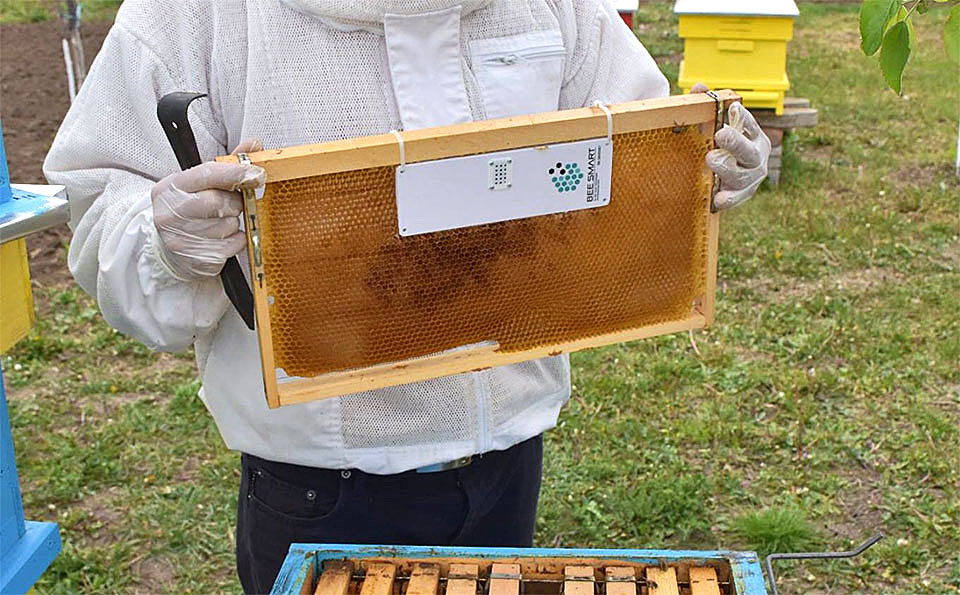
“Better Beekeeping with Smart Hives …” from pollenity.com
To truly understand the impact of remote hive monitoring systems, let’s explore some real-world examples of their successful implementation. These case studies demonstrate how technology can transform beekeeping practices, leading to healthier hives and more efficient operations.
Appalachian Multi-Apiary Informatics System
The Appalachian Multi-Apiary Informatics System (AppMAIS) project is a prime example of successful implementation. This initiative utilized IoT devices and the Thingsboard dashboard to monitor 28 honey beehives in North Carolina. The project provided valuable data on hive conditions, enabling beekeepers to optimize their management practices, including the use of weatherproof hive insulation for temperature control.
Reductions in Labor Costs and Improved Efficiency
Implementing remote monitoring systems can lead to significant reductions in labor costs. By automating data collection and analysis, beekeepers can reduce the time spent on manual inspections and focus on more strategic tasks. This increased efficiency not only saves money but also allows beekeepers to manage larger apiaries without additional labor.
Impact on Bee Colony Health and Productivity
Most importantly, remote monitoring systems have a profound impact on bee colony health and productivity. By providing real-time data on hive conditions, beekeepers can quickly address issues such as temperature fluctuations, moisture buildup, or pest infestations. This proactive approach leads to healthier hives and increased honey production.
Furthermore, by tracking trends and patterns in hive data, beekeepers can make informed decisions to improve their management practices over time. This continuous improvement cycle ultimately enhances the overall productivity and sustainability of their beekeeping operations.
Future Trends in Beekeeping Technology
As technology continues to evolve, we can expect further advancements in beekeeping practices. Future trends include the integration of artificial intelligence and machine learning to provide even deeper insights into hive conditions and bee behavior.
Sustainability and environmental impact are also becoming increasingly important. Future monitoring systems will likely focus on minimizing their ecological footprint while maximizing the benefits for bee colonies and beekeepers alike. These innovations promise to revolutionize the industry, making beekeeping more efficient and sustainable than ever before. For more insights, explore how tech firms use remote monitoring to help honey bees.
AI and Machine Learning Integration
Artificial Intelligence (AI) and Machine Learning (ML) are making their way into the realm of beekeeping, promising to enhance hive monitoring systems even further. By analyzing vast amounts of data, these technologies can identify patterns and predict potential issues before they become critical. This predictive capability allows beekeepers to take proactive measures, ensuring the health and productivity of their hives. For instance, implementing effective Varroa mite treatments can be a crucial step in maintaining healthy colonies.
For instance, AI algorithms can analyze bee movement patterns to detect signs of stress or disease. By understanding these patterns, beekeepers can intervene early, potentially saving a colony from collapse. This level of insight is invaluable, especially for large-scale operations where manual monitoring is impractical.
Sustainability and Environmental Impact
As beekeeping technology advances, sustainability remains a key focus. Remote hive monitoring systems are designed to minimize environmental impact by reducing the need for frequent travel to apiaries. This not only saves fuel and reduces emissions but also lessens the disturbance to bee colonies.
Furthermore, by providing data-driven insights, these systems help beekeepers adopt more sustainable practices. For example, by monitoring resource use within the hive, beekeepers can optimize feeding and reduce waste. This not only benefits the environment but also contributes to healthier and more resilient bee populations.
Potential Innovations in Hive Monitoring
“The future of hive monitoring lies in the integration of cutting-edge technologies like drones and blockchain. Drones could be used for aerial inspections, while blockchain technology could provide secure and transparent data management.”
Imagine a world where drones autonomously inspect apiaries, capturing high-resolution images and videos of hives. This technology could provide an additional layer of monitoring, complementing existing systems and offering new insights into hive health. For those interested in maintaining healthy colonies, exploring varroa mite treatments can be a crucial step.
Moreover, blockchain technology could revolutionize data management in beekeeping. By providing a secure and transparent way to store and share data, blockchain could enhance collaboration among beekeepers, researchers, and policymakers. This could lead to more coordinated efforts in bee conservation and sustainable beekeeping practices.
Frequently Asked Questions (FAQ)
As we delve into the world of remote hive monitoring systems, you may have some questions. Here, I address some of the most common inquiries to provide clarity and guidance.
How does remote hive monitoring improve beekeeping?
Remote hive monitoring improves beekeeping by providing real-time data on hive conditions, enabling beekeepers to make informed decisions. This technology reduces the need for manual inspections, saving time and minimizing disturbances to the bees. By identifying potential issues early, beekeepers can take proactive measures to ensure hive health and productivity. For instance, beekeepers can use effective varroa mite treatments to maintain healthy colonies.
What are the most reliable systems available?
Some of the most reliable remote hive monitoring systems include BroodMinder, BeeWise, ApisProtect, and HiveKeepers. Each of these systems offers unique features and benefits, such as precision monitoring, automated hive management, and comprehensive data collection. Choosing the right system depends on your specific needs and beekeeping practices.
BroodMinder is known for its precision, while BeeWise offers advanced automation features. ApisProtect provides comprehensive data insights, and HiveKeepers focuses on user-friendly integration with existing practices, ensuring optimal temperature control and regulation.
How do these systems help in reducing labor costs?
These systems reduce labor costs by automating data collection and analysis, minimizing the need for manual inspections. Beekeepers can monitor multiple hives remotely, allowing them to manage larger apiaries without additional labor. This increased efficiency translates to cost savings and more effective hive management.
What technological advancements can we expect in future hive systems?
Future advancements in hive monitoring systems include the integration of AI and machine learning for predictive analytics, the use of drones for aerial inspections, and blockchain technology for secure data management. These innovations promise to enhance hive monitoring capabilities, making beekeeping more efficient and sustainable.
Are these systems suitable for small-scale beekeepers?
Yes, remote hive monitoring systems are suitable for small-scale beekeepers. Many systems offer scalable solutions that can be tailored to the size of the operation. By providing valuable insights into hive conditions, these systems help small-scale beekeepers optimize their practices and ensure the health and productivity of their hives.
In conclusion, remote hive monitoring systems are transforming the beekeeping industry by providing beekeepers with the tools they need to manage their hives more effectively. By embracing these technologies, beekeepers can enhance their operations, improve hive health, and contribute to the sustainability of our planet’s vital bee populations.
Remote hive monitoring systems have revolutionized the way beekeepers manage their colonies. These systems allow for real-time data collection on hive conditions, helping beekeepers make informed decisions to maintain colony health. By implementing these technologies, beekeepers can monitor temperature, humidity, and even detect the presence of pests like the Varroa mite. For those dealing with pest issues, exploring Varroa mite treatments can be crucial for maintaining healthy colonies.




Leave a Reply