
Key Takeaways
Mason bees are solitary bees that do not produce honey but are excellent pollinators.
Mason bee houses should be made from natural materials like wood and placed in a sunny, sheltered spot.
Unlike honey bees, mason bees do not sting unless provoked and are safe around children and pets.
Building a mason bee house requires simple materials like wooden blocks or tubes, and can be done in a few easy steps.
Proper maintenance of a mason bee house includes regular cleaning and monitoring for pests.

“3 things Mason bees need to flourish …” from www.seattletimes.com
Mason Bee House: Understanding Bee Behavior, Guide & Tips
Why Mason Bees Matter: Introduction to Their Behavior and Benefits
Mason bees are fascinating creatures that play a crucial role in our ecosystem. Unlike honey bees, they are solitary and do not live in colonies. Each female mason bee is a queen in her own right, responsible for her own nest and offspring. This independence makes them incredibly efficient pollinators, as they focus solely on gathering pollen and nectar.
Mason bees are known for their gentle nature. They rarely sting, making them perfect for gardens where children and pets play. Besides that, their pollination efficiency is unmatched. A single mason bee can pollinate as many flowers as 100 honey bees. Therefore, having a mason bee house in your garden can significantly boost the health of your plants.
Essential Mason Bee Behavior Insights
Understanding the behavior of mason bees is key to creating an effective habitat for them. Mason bees emerge in early spring, just as fruit trees and many flowers begin to bloom. They are active for about six to eight weeks, during which time they mate, lay eggs, and gather pollen.
Mason bees prefer to nest in small, dark cavities. In the wild, they might use hollow stems, abandoned beetle holes, or cracks in wood. This is why mason bee houses, which mimic these natural nesting sites, are so effective.
Differences Between Mason Bees and Honey Bees
It’s important to understand the differences between mason bees and honey bees to appreciate their unique roles in pollination. Here are some key distinctions:
|
Aspect |
Mason Bees |
Honey Bees |
|---|---|---|
|
Nesting Behavior |
Solitary |
Colony |
|
Honey Production |
None |
Produces Honey |
|
Sting |
Rarely Sting |
Can Sting Multiple Times |
|
Pollination Efficiency |
Very High |
Moderate |
Importance of Mason Bees for Pollination
Mason bees are particularly valuable for their pollination efficiency. Their foraging behavior ensures that they come into contact with more flowers per day than honey bees. This is because mason bees collect pollen on their hairy bodies and transfer it from flower to flower as they forage.
Studies have shown that a few mason bees can pollinate an entire fruit tree, whereas it would take thousands of honey bees to achieve the same result. This makes them especially beneficial for home gardeners and small-scale farmers looking to improve their crop yields naturally. For those interested in enhancing their garden, here are some best bee house tips and methods to attract mason bees.
How to Build an Effective Mason Bee House

“How to Make a DIY Mason Bee Beehive” from diy.dunnlumber.com
Building a mason bee house is a rewarding project that can benefit your garden immensely. For a comprehensive guide, check out this DIY cedar bee house guide. Let’s dive into the materials you’ll need and the steps to get started.
Materials Needed for Construction
Wooden blocks or untreated wood
Drill with various-sized bits
Paper tubes or bamboo canes
Chicken wire (optional, for protection)
Roofing material (to keep the house dry)
Sandpaper
Step-by-Step Building Instructions
Follow these steps to create your own mason bee house:
Choose a block of untreated wood or a bundle of bamboo canes.
Drill holes into the wood, making sure they are about 6 inches deep and 5/16 inch in diameter. If using bamboo canes, cut them to the same length.
Sand the edges of the holes to remove splinters that could harm the bees.
Arrange the drilled wood or bamboo canes in a waterproof container or frame, ensuring they are tightly packed.
Cover the front with chicken wire if desired, to protect the bees from birds.
Attach a small roof to keep the house dry and place it in a sunny, sheltered spot in your garden.
Common Mistakes to Avoid
When building and maintaining your mason bee house, avoid these common pitfalls:
Using treated wood, which can be toxic to bees.
Placing the house in a shady or damp location.
Failing to clean the house regularly, leading to disease and parasites.
Best Time to Build and Set Up
The best time to build and set up your mason bee house is in early spring, just before the bees begin to emerge from their winter hibernation. This timing ensures that your bee house is ready and waiting for them as they start their nesting activities. Aim to have your bee house in place by mid-to-late March, depending on your local climate. For more details, you can check out this DIY cedar bee house guide.
Besides that, early spring is when many plants begin to bloom, providing ample pollen and nectar for the mason bees. By setting up your bee house at this time, you can help ensure a smooth transition for the bees and a successful pollination season for your garden. For more tips on how to attract mason bees, check out these best bee house tips and methods.
Optimal Placement and Maintenance of Your Mason Bee House
Proper placement and maintenance of your mason bee house are crucial for attracting bees and ensuring their health and productivity. Let’s explore the best practices for setting up and caring for your bee house.
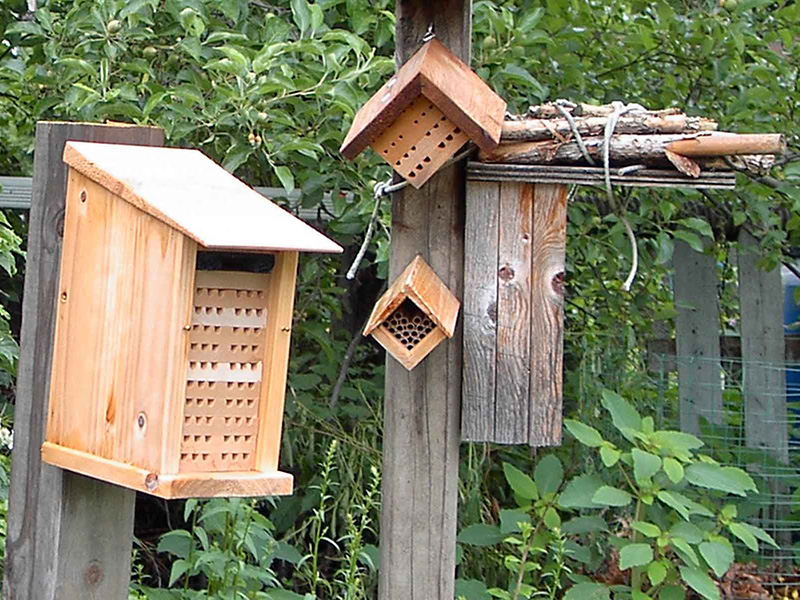
“Bee houses – Our Habitat Garden” from ourhabitatgarden.org
Ideal Locations for Setting Up
Choosing the right location for your mason bee house is essential for attracting bees and providing them with a safe and comfortable environment. Here are some tips for selecting the ideal spot:
Sunny Spot: Place the bee house in a location that receives plenty of sunlight, ideally facing south or southeast. Mason bees thrive in warm, sunny conditions.
Sheltered Area: Ensure the bee house is sheltered from strong winds and heavy rain. Placing it under an eave or attaching a small roof can help protect the bees.
Proximity to Flowers: Position the bee house near a variety of flowering plants that provide pollen and nectar. This will make it easier for the bees to forage and gather food.
Height: Mount the bee house at least 3-6 feet off the ground to keep it safe from predators and to provide a more comfortable environment for the bees.
Temperature and Sunlight Considerations
Mason bees are ectothermic, meaning their body temperature is regulated by the environment. Therefore, placing the bee house in a sunny spot is crucial for their activity and survival. Aim for a location that receives at least 6 hours of direct sunlight each day.
In addition to sunlight, consider the temperature in your area. Mason bees prefer temperatures between 55°F and 75°F. If your region experiences extreme temperatures, you may need to provide additional insulation or shade to keep the bees comfortable.
How to Secure Your Bee House
Securing your mason bee house properly ensures it remains stable and safe for the bees. Follow these steps to secure your bee house:
Mounting: Attach the bee house to a sturdy structure, such as a fence, tree, or building. Use screws or brackets to ensure it is securely fastened.
Stability: Make sure the bee house is level and stable. A wobbly or tilted bee house can deter bees from nesting and may cause the house to fall during strong winds.
Protection: If your bee house is exposed to heavy rain or strong winds, consider adding a small roof or placing it under an eave for additional protection.
Cleaning and Maintenance Tips
Regular cleaning and maintenance of your mason bee house are essential for preventing disease and ensuring the health of your bees. Here are some tips for keeping your bee house in top condition: You can also learn more about attracting mason bees to your garden.
Annual Cleaning: Clean the bee house at the end of each nesting season, typically in late summer or early fall. Remove old nesting materials and sanitize the house with a mild bleach solution (1 part bleach to 9 parts water).
Inspect for Pests: Regularly check the bee house for signs of pests, such as mites or wasps. Remove any infested materials and take steps to prevent future infestations.
Replace Damaged Materials: Replace any damaged or worn-out nesting materials, such as paper tubes or wooden blocks, to provide a clean and safe environment for the bees.
Avoiding Pesticides and Chemicals
To ensure the health and safety of your mason bees, avoid using pesticides and chemicals in and around your garden. Pesticides can be harmful to bees and other beneficial insects, disrupting their natural behaviors and causing long-term damage to their populations. For more information on how to protect your bee house, check out this guide.
Instead, opt for natural pest control methods, such as introducing beneficial insects like ladybugs and lacewings, or using organic sprays made from neem oil or insecticidal soap. These methods can help protect your garden without harming your mason bees. For more information on how to protect your bee house, check out these simple predator protection strategies.
Coexisting with Honey Bees: Practical Tips
If you have both mason bees and honey bees in your garden, it’s important to understand how to help them coexist peacefully. Here are some practical tips for managing both types of bees:
Recommended Distances Between Mason Bee House and Honey Bee Hive
While mason bees and honey bees can coexist, it’s best to keep their nesting sites separate to avoid competition for resources. Aim to place the mason bee house at least 30 feet away from the honey bee hive. This distance helps reduce competition and ensures both types of bees have ample access to pollen and nectar.
Resource Foraging Patterns
Mason bees and honey bees have different foraging patterns and preferences, which can help minimize competition. Mason bees tend to forage closer to their nesting sites, within a radius of about 300 feet. In contrast, honey bees can travel much farther, up to several miles, in search of food. To attract mason bees, consider these best bee house tips.
Again, by providing a diverse array of flowering plants throughout your garden, you can help ensure that both mason bees and honey bees have access to the resources they need. Plant a mix of early, mid, and late-season bloomers to provide a continuous food supply for both types of bees.
Observational Insights from Previous Studies
Studies have shown that mason bees and honey bees can coexist successfully when provided with adequate resources and proper management. Observations from previous studies indicate that mason bees are less aggressive and more tolerant of other bee species compared to honey bees.
“In a recent study, researchers found that mason bees and honey bees could coexist peacefully in the same garden, provided that their nesting sites were adequately spaced and there was a sufficient supply of pollen and nectar.” – Scientific Reports
By following these guidelines and closely monitoring the interactions between your mason bees and honey bees, you can create a harmonious environment that supports the health and productivity of both bee populations. For more information, check out these bee house placement mistakes and how to avoid them.
Ensuring a Healthy Mason Bee Population
Maintaining a healthy mason bee population requires ongoing care and attention. Here are some essential tips for supporting your mason bees throughout the year:
Providing Sufficient Pollen and Nectar Sources
To ensure your mason bees have enough food, plant a variety of flowering plants that provide pollen and nectar. Focus on native plants, as they are more likely to attract and support local bee populations. Some excellent choices include:
Wildflowers
Fruit trees (apple, cherry, pear)
Herbs (lavender, rosemary, thyme)
Flowering shrubs (lilac, butterfly bush, hydrangea)
By providing a diverse array of plants, you can help ensure a continuous food supply for your mason bees throughout their active season.
Combating Pests and Predators
Mason bees can be vulnerable to various pests and predators, such as mites, wasps, and birds. To protect your bee house and its inhabitants, consider these simple predator protection strategies:
Use Chicken Wire: Cover the front of the bee house with chicken wire to prevent birds from accessing the nesting sites.
Regular Inspections: Check the bee house regularly for signs of pests and remove any infested materials promptly.
Natural Predators: Introduce natural predators, such as ladybugs and lacewings, to help control pest populations in your garden.
By taking these steps, you can help ensure a safe and healthy environment for your mason bees.
Monitoring Mason Bee Activity and Health
Regularly monitoring your mason bee house is crucial to ensure the bees are healthy and thriving. Observe the activity around the house, especially during the early spring when the bees are most active. Look for bees entering and exiting the holes, which indicates that they are nesting and laying eggs. For more tips on maintaining your bee house, check out these simple predator protection strategies.
Keep an eye out for any signs of disease or parasites. If you notice any unusual behavior, such as bees struggling to fly or excessive mite infestations, take immediate action to address the issue. Regular inspections can help you catch problems early and take the necessary steps to protect your mason bee population.
Seasonal Care and Overwintering
As the active season for mason bees comes to an end in late spring or early summer, it’s important to prepare for the overwintering period. Mason bee larvae will develop inside the nesting tubes, where they will remain until the following spring.
To ensure successful overwintering, follow these steps: protect your bee house from predators, provide adequate insulation, and monitor the bees’ health regularly.
Remove and Store Tubes: Carefully remove the nesting tubes from the bee house and store them in a cool, dry place. This helps protect the developing larvae from harsh weather conditions and predators.
Monitor Humidity: Maintain a stable humidity level of around 60-70% to prevent the larvae from drying out or becoming moldy.
Check for Pests: Regularly inspect the stored tubes for signs of pests or disease. Remove any infested tubes to prevent the spread of contamination.
By providing proper care and monitoring during the overwintering period, you can help ensure a healthy and thriving mason bee population for the next season.
Final Recommendations for Successful Mason Bee Keeping
Successfully keeping mason bees involves understanding their behavior, providing a suitable habitat, and ensuring their health through regular maintenance and monitoring. Here are some final recommendations to help you achieve success: avoid common bee house placement mistakes and follow best practices.
Summary of Key Points
To summarize, here are the key points to remember when setting up and maintaining a mason bee house:
Mason bees are solitary, gentle pollinators that do not produce honey.
Build your bee house using natural materials like wood or bamboo and place it in a sunny, sheltered spot.
Regularly clean and maintain the bee house to prevent disease and pests.
Provide a diverse array of flowering plants to ensure a continuous food supply.
Monitor the bee house for signs of activity and health issues, and take action when needed.
Further Resources and Reading
For more information on mason bees and how to support them, consider exploring the following resources:
Learn more about bee house placement mistakes and best practices to ensure your bee house is set up for success.
Frequently Asked Questions
How long do Mason Bees live?
Mason bees have a relatively short lifespan. Adult mason bees typically live for about six to eight weeks. During this time, they mate, lay eggs, and gather pollen and nectar. The larvae then develop inside the nesting tubes and emerge as adults the following spring. For more information on protecting your bee house, check out these simple predator protection strategies.
What is the best time of year to set up a Mason Bee house?
The best time to set up a mason bee house is in early spring, just before the bees begin to emerge from their winter hibernation. Aim to have your bee house in place by mid-to-late March, depending on your local climate. This timing ensures that your bee house is ready and waiting for them as they start their nesting activities.
Can I have both Mason Bees and Honey Bees in my garden?
Yes, you can have both mason bees and honey bees in your garden. However, it’s important to keep their nesting sites separate to avoid competition for resources. Place the mason bee house at least 30 feet away from the honey bee hive. Providing a diverse array of flowering plants throughout your garden can also help ensure that both types of bees have access to the resources they need.
How do I attract Mason Bees to my house?
To attract mason bees to your house, follow these tips and methods:



Leave a Reply